
Our home in Bwabwata National Park
The Buffalo Core Area of Bwabwata National Park is not only a wilderness of elephants, sable, roan, reedbuck, and buffalo. It is also a landscape that has carried the weight of human history – scars that remain etched into its soil and trees.
During the 1970s and 1980s, this area formed part of a militarised zone under the South African Defence Force during Namibia’s struggle for independence. Bwabwata – then called the Caprivi Game Park – lay on the frontline of conflict. Soldiers built bases hidden in the dense teak and mopane woodlands, sand tracks were carved for military patrols, and aircraft cut their paths low over the Okavango floodplain. To this day, rusting relics, scattered trenches, and overgrown fortifications can be found if you look closely enough – reminders of a time when the park was seen as strategic ground, not a sanctuary for nature.
And yet, much like the buffalo for which this core area is named, the land endured. The African buffalo is known for its scars. Old bulls – called Dugga boys – bear faces marked by years of survival. Their horns are battered, their hides torn, their eyes weathered with experience. But it is precisely because of their scars that they are revered. Their resilience commands respect.
So too does Bwabwata wear its scars with dignity. The remnants of conflict in these woodlands serve not as blemishes but as reminders: that peace must be nurtured, that conservation must be defended, and that human presence, when guided by purpose, can be a force for healing rather than harm.
The Buffalo Private Collection embraces this truth. By creating a tourism presence here, we acknowledge the past while building a future. The scars of history, like those of the buffalo, become symbols of resilience. They remind us that survival is not about perfection, but about endurance – and that this endurance, when paired with vision, can lead to restoration.
The San of Bwabwata: Custodians of the Land
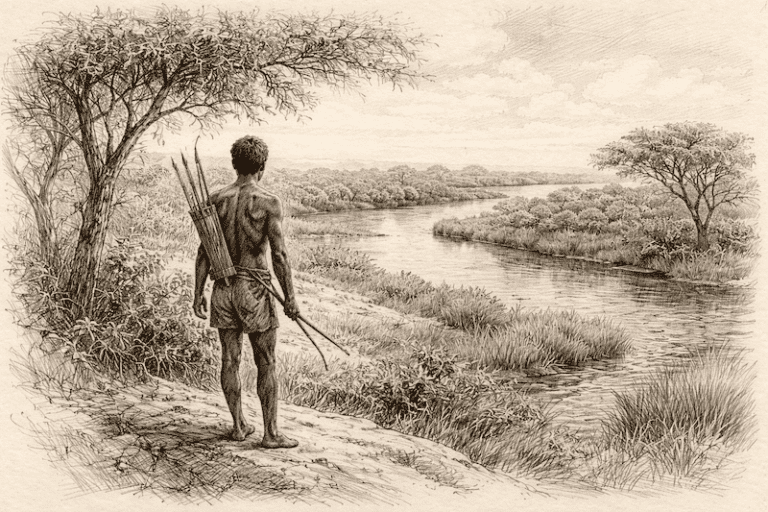
Within Bwabwata National Park live the Khwe San, a community with roots as deep as the river itself. For centuries, they lived as semi-nomadic hunter-gatherers, following the seasons, drawing on an unparalleled knowledge of the bush. Every spoor in the sand, every shift in the wind, every medicinal plant and edible berry – all are part of their living library of survival.
History, however, has not been easy. The San people of the Caprivi were displaced during colonial times, caught in the crossfire of regional conflicts, and conscripted during the military occupation of the park. Despite this, they remained, adapting while holding onto their identity. Today, they are among Namibia’s most vulnerable yet most knowledgeable communities – people whose conservation instincts are born not of theory but of lived experience.
In this joint venture with the Buffalo Private Collection, the Khwe San step forward not as bystanders but as partners. This lodge is not simply built in their home; it is built with them. It is a model that ensures tourism uplifts, empowers, and sustains. By weaving San knowledge into the lodge experience – from guided bush walks to storytelling, from tracking wildlife to learning about traditional plant uses – guests encounter the land through the eyes of its original custodians.
This is conservation not only of nature, but of culture. A chance to celebrate one of the oldest living traditions on earth, rooted in the woodlands of Bwabwata.